Roof Repairs
Repairs across Ryde and Eastwood, where end-of-life terracotta and gutters overwhelmed on steep blocks cause most leaks.
Learn more →Colorbond and metal roofing for the Ryde district, including tile-to-metal conversions, low-pitch sections and river-front corrosion grades.
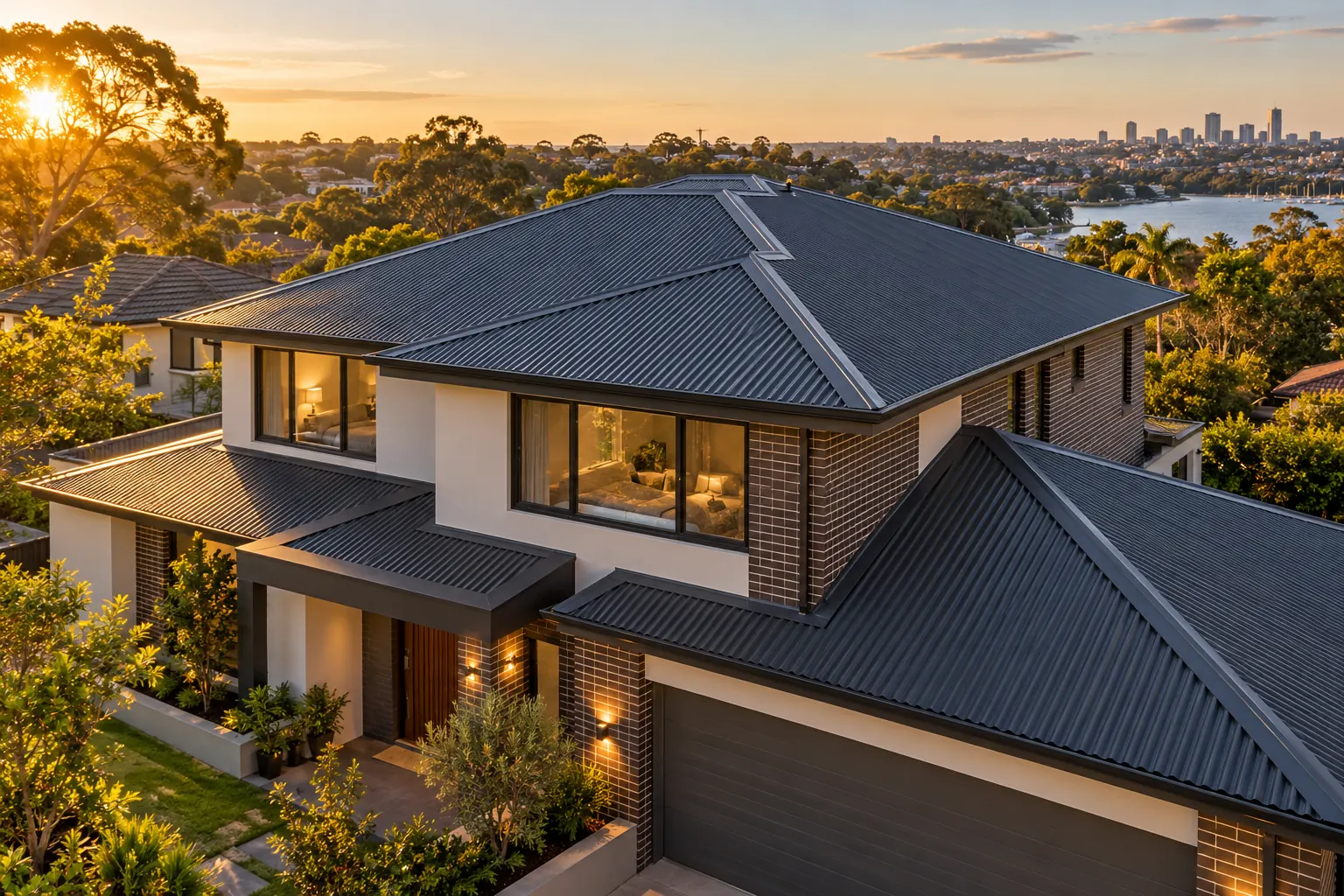
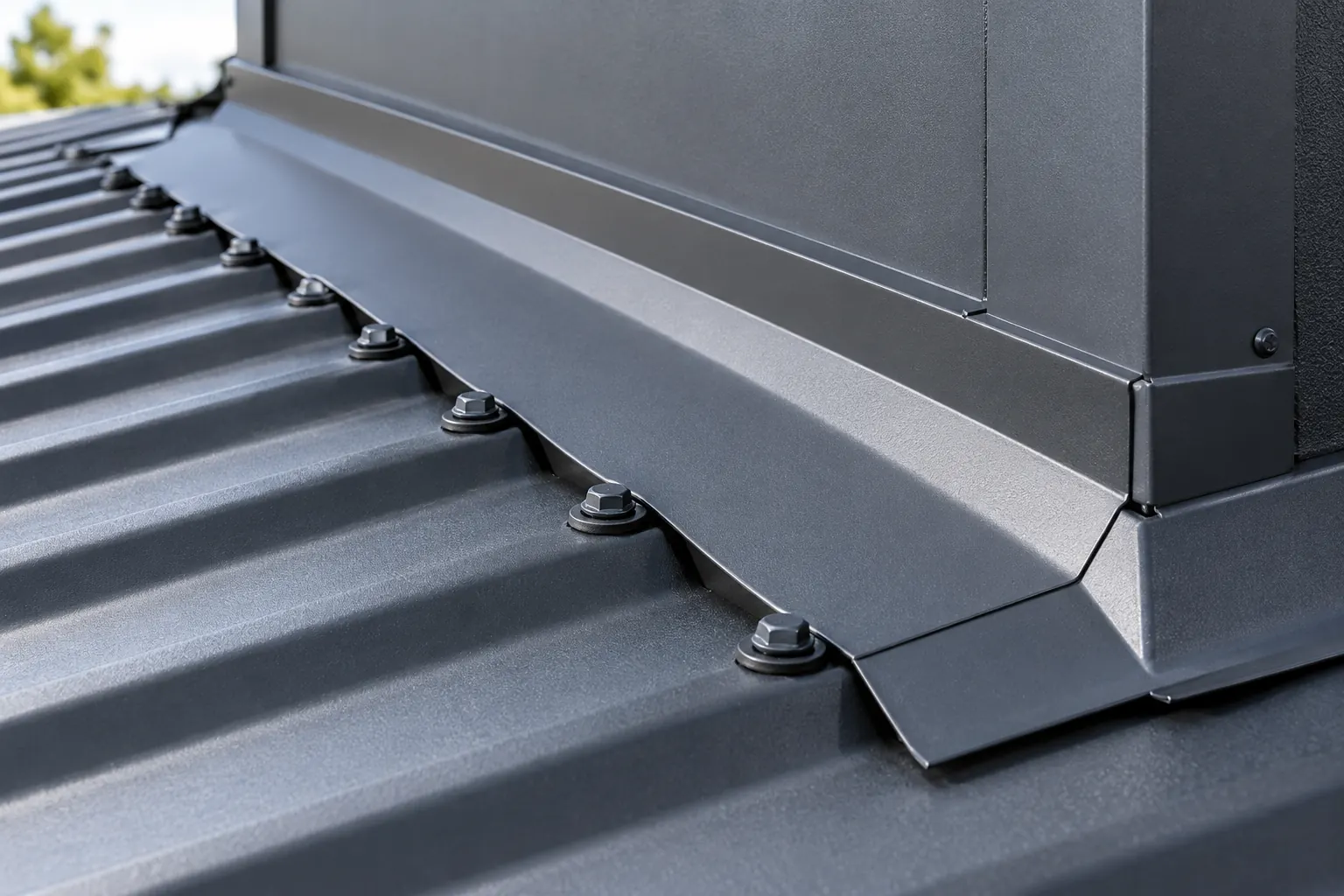
A Colorbond roof fails at its edges and its holes, never in the middle of a sheet. So a metal roofing job is really a job about flashings, fasteners, valleys, laps and drainage — and whether the person installing it understood the building underneath.
That is worth saying up front in this district, because the buildings vary enormously. A new steel roof here might be going onto a 1930s brick bungalow in Denistone, a near-flat section on a walk-up block in West Ryde, a modern addition on a Putney waterfront block, or a plant-room deck behind a parapet at Macquarie Park. Same material, four completely different specifications.
Free inspection, written quote, no obligation. Call (02) 9100 0199.
Tile needs a conventional pitch. Below that, water stops running and starts sitting, and it finds the laps. Metal profiles exist for very low pitches, and the specification is about long single sheets with no end laps, correct side-lap detailing and real overflow provision. Most of the near-flat roofing in the older centres is on 1960s and 70s brick flats, often behind a parapet with a box gutter, and that combination is unforgiving of a sloppy install.
Across the ridges that fall away toward Glades Bay, Morrisons Bay and Buffalo Creek, plenty of houses are two storeys at the back and one at the front. Fewer, longer sheets mean less time on a difficult roof and fewer joins where things can go wrong.
Steel is a fraction of the weight of tile. On a house whose framing has carried a tile roof for eighty or ninety years, that is a structural benefit rather than just a cost saving.
Matching an out-of-production inter-war tile across a new addition is a real problem. A deliberate change of material on the addition, in a colour that sits with the existing roof, often looks better than a near-miss tile match.
The Ryde district has two very different exposures within a few kilometres of each other. Inland at Marsfield, Macquarie Park, Denistone West or Eastwood, standard material is appropriate. On the river and harbour frontages — Putney, Tennyson Point, Henley, Huntleys Point, Woolwich — salt-laden air is a real design input.
What we change close to the water:
Replacing like with like on a standard house in the City of Ryde is usually uncomplicated. Changing material is the one that needs checking, because it changes what the street sees.
The City of Ryde LEP 2014 lists heritage conservation areas — expanded to eight in late 2020, among them the Darvall Estate and Chatham Road areas around Denistone and the Tyrell Street area in Gladesville. The Municipality of Hunters Hill, which covers Hunters Hill, Woolwich, Boronia Park, Henley, Huntleys Point and part of Gladesville, is stricter: complying development is not an available pathway inside its conservation areas, and council issues heritage exemption letters only for genuinely minor work, with the published example being a slate roof replaced in slate using matching flashings and capping.
In practice that means a tile-to-metal conversion is unlikely to be the right answer on a heritage house or in a conservation street, and we will say so rather than quote it.
If a quote does not mention flashings and drainage, it is a price for sheets, not for a roof.
Metal roofing rarely arrives on its own. It is usually part of a full roof replacement, it almost always comes with new gutters and downpipes, and on the low-pitch sections it frequently follows a failure that began as a storm or emergency repair.
Work is carried out by established, licensed and insured roofing contractors working to NSW Fair Trading requirements, and the completed job carries a written workmanship warranty.
Call (02) 9100 0199 or send the quote form with the suburb and roughly what you are trying to solve. We work across the whole district, including Macquarie Park, Putney and Meadowbank.
Repairs across Ryde and Eastwood, where end-of-life terracotta and gutters overwhelmed on steep blocks cause most leaks.
Learn more →Re-roofing inter-war bungalows across Ryde, and the low-pitch and near-flat sections on 1960s walk-ups.
Learn more →Restoration for original terracotta roofs around Ryde: rebedding, repointing and recoating rather than replacing.
Learn more →Gutter and downpipe upgrades across Ryde, sized for the runoff a steep block actually concentrates.
Learn more →Storm response across Ryde, Eastwood and Gladesville after heavy rain and wind.
Learn more →Roof inspections and written reports across the Ryde district, including slate and heritage roofs at Hunters Hill.
Learn more →Less than people expect, because a modern metal roof is not bare sheeting over a ceiling. With sarking and the ceiling insulation that is already in most houses here, the difference against tile is noticeable in a downpour but not objectionable. If quiet matters to you, say so at the inspection and it can be specified for — heavier insulation under the sheets changes the result more than the profile choice does.
It changes the grade, not the idea. Air close to the water carries salt, and salt is hard on fasteners, flashings and cut edges long before it is hard on the sheet itself. Closer to the water at Putney, Tennyson Point, Huntleys Point or Woolwich, we specify a coastal-grade finish and compatible fixings, and we avoid mixing metals that will corrode each other at the joins. Inland at Marsfield or Denistone a standard grade is fine.
Usually, and it is often the only thing that can. Tile needs a conventional pitch to shed water; some metal profiles are made for very low pitches, with longer sheets to avoid end laps and the sheet runs set out so water is never asked to cross a join uphill. This is exactly the situation on the near-flat sections and additions on the 1960s and 70s blocks of flats across Ryde, West Ryde and Gladesville.
On a plain post-war brick house in most of the City of Ryde, swapping tile for metal is a straightforward job. The approval question is about the look: a material change is the one most likely to need consent, and a heritage listing, a heritage conservation area, or an address inside the Municipality of Hunters Hill all change the answer. We check the planning controls for your address before anything is quoted or ordered.
The sheet is the durable part. What needs attention over the years is everything that penetrates or terminates it: fasteners and their washers, flashings at walls and chimneys, valleys, and the seals around vents and flues. A visual check every couple of years, and a wash-down of sheltered areas that do not get rained on properly, is realistically the maintenance. Fasteners that have backed off are the most common thing we find.
Tell us what you need and we'll get straight back to you. Prefer to talk? Call (02) 9100 0199 and speak to someone local.
Call (02) 9100 0199