Roof Replacement
Re-roofing inter-war bungalows across Ryde, and the low-pitch and near-flat sections on 1960s walk-ups.
Learn more →Leak tracing, tile, ridge capping, valley and flashing repairs across the Ryde district. Free roof inspection, written itemised quote.
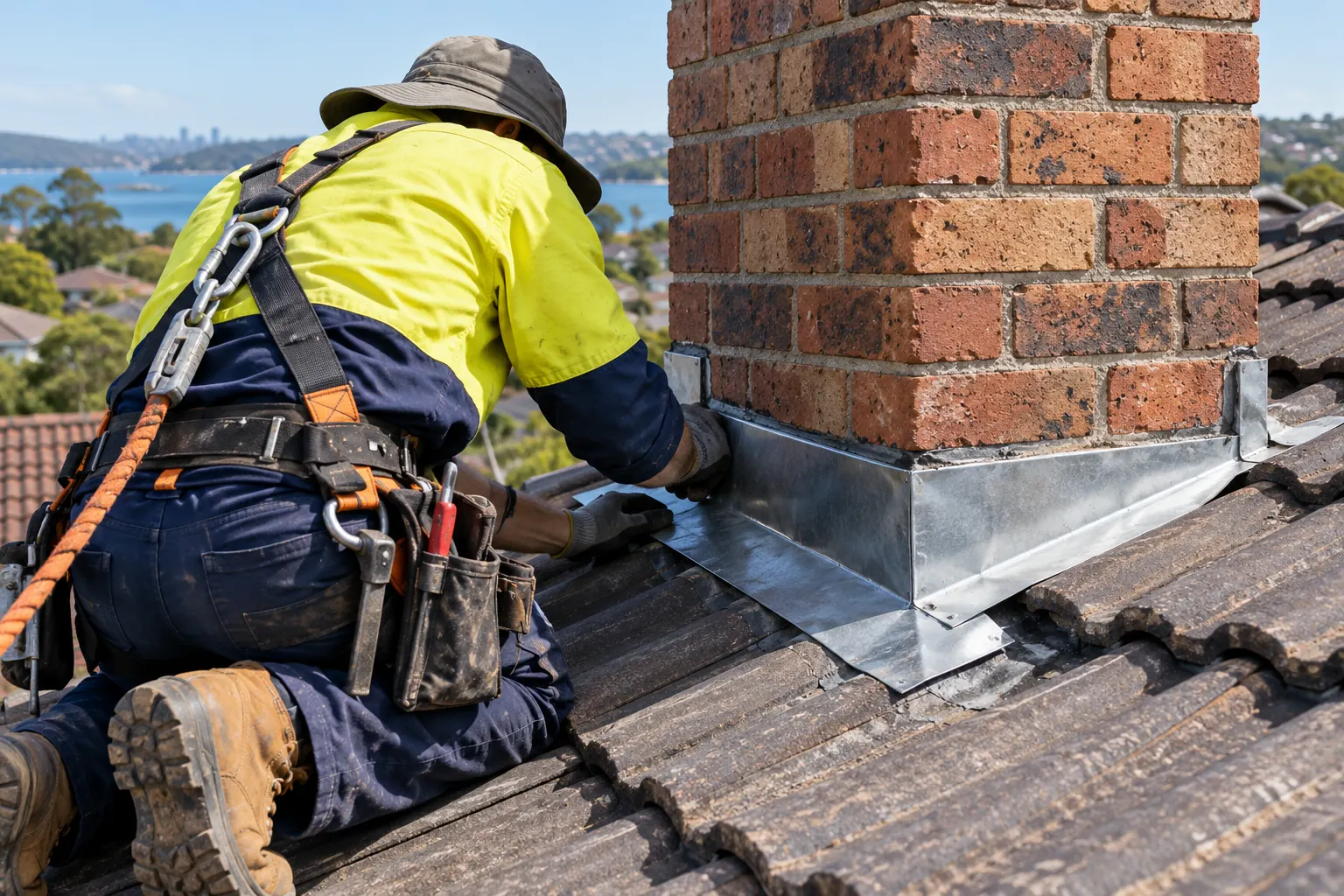
Roofs leak at joins. On the brick housing that runs through Ryde, West Ryde, Denistone and Eastwood — most of it still under its original terracotta — five faults account for nearly all the water that ends up on a ceiling:
Call (02) 9100 0199 and we will come and look at no cost.
A leak repair is only as good as the diagnosis, and a stain on a cornice is rarely under the hole. Water lands on a batten or on sarking and travels sideways and downhill before it drops, so the inside evidence has to be read backwards.
The way we work through it:
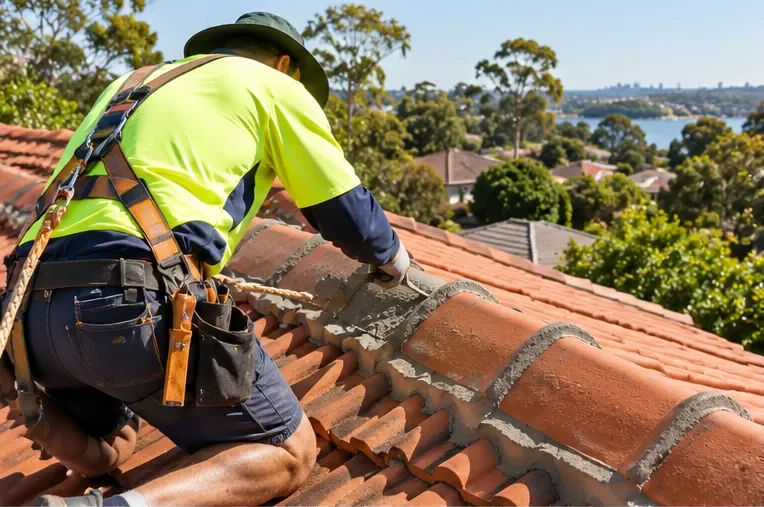
Rebedding and repointing. The capping is lifted, old mortar removed, the caps rebedded and then pointed with a flexible pointing compound rather than a straight sand and cement mix, so it moves with the roof instead of cracking at the first hot week. Australian Standard AS 2050 covers how tile roofs and their capping are set.
Valley replacement. The tiles along the valley come up, the rusted tray comes out, a new tray goes in with the correct lap and the tiles are reset and cut back to a clean line. Done properly it is invisible from the ground. Done badly it is a leak in two years.
Flashings. Chimneys, parapets, wall abutments, vents and skylights. Where the original lead is still sound it can often be redressed; where it has fatigued it is replaced. Sealant alone is a holding measure, not a repair.
Tile replacement. Matching an old profile is a real constraint, particularly on inter-war terracotta where the original pattern is long out of production. Second-hand tiles of the right profile usually exist; a mismatched tile that sits proud is both ugly and a future leak.
Gutter and downpipe corrections. If the gutter has no fall left in it, or the downpipe is too small for the roof area feeding it, the repair is the drainage, not the roof. That often sits with gutter repair and replacement.
The repair changes with the roof.
Terracotta and concrete tile dominates the older brick housing through Ryde, Denistone, Eastwood and Marsfield. Most repairs here are mortar, valleys and flashings.
Low-pitch and near-flat sections on the 60s and 70s walk-ups come with box gutters, sumps and parapets. There is no spare capacity in a box gutter, so the fix is usually about restoring fall and outlet size, plus overflow provision, rather than patching a surface.
Slate in the Hunters Hill conservation streets needs slate-specific work: individual slates refixed with copper or stainless hooks, lead properly dressed, and like-for-like material. Council in that municipality can issue a heritage exemption letter for genuinely minor work such as a slate roof replaced in slate with matching flashings and capping, which is a far easier path than a full application — but it has to be asked for before the work, not after.
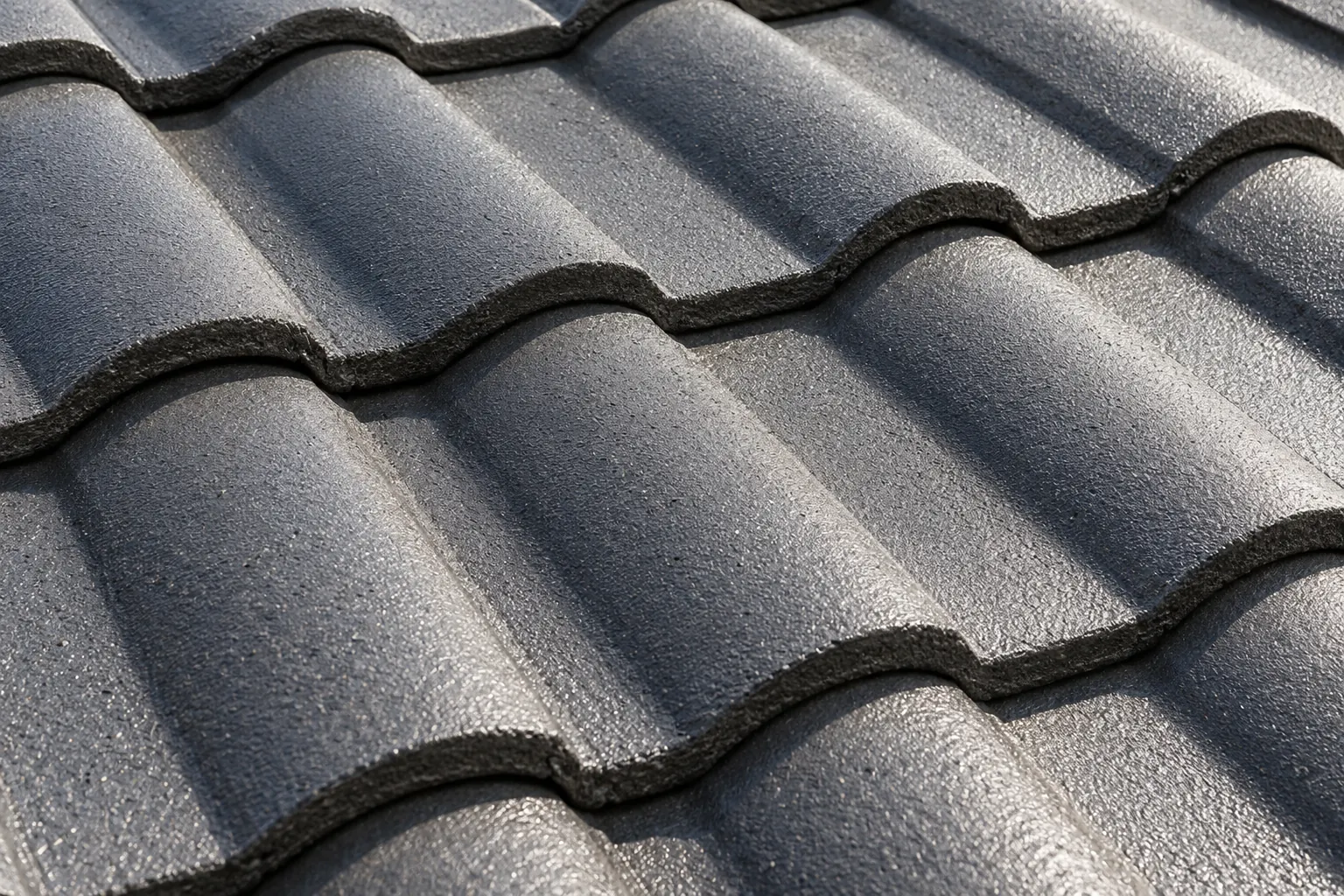
We would rather lose a job than sell you a patch on a roof that is finished. The signs that repair has run out of road:
At that point you are better off spending once. If the house is pre-1990 and there is asbestos cement in the eaves, gables or any sheet roofing, that is handled separately and lawfully — in NSW, removing more than 10 square metres of non-friable asbestos requires a licensed removalist, who must notify SafeWork NSW at least five calendar days before starting.
Work is carried out by established, licensed and insured roofing contractors working to NSW Fair Trading requirements, and any residential building work over $5,000 including GST in NSW must be under a licence and a written contract. Completed work carries a written workmanship warranty.
Call (02) 9100 0199, or send the quote form and describe what you have seen — a stain, a drip, a tile on the lawn, a gutter that overflows at the same corner every time. We cover Ryde, West Ryde, Eastwood, Gladesville and the rest of the district. If you need the fault documented for an insurer or a purchase, start with a roof inspection and report instead.
Re-roofing inter-war bungalows across Ryde, and the low-pitch and near-flat sections on 1960s walk-ups.
Learn more →Colorbond roofing across the Ryde district, including tile-to-metal conversions on low-pitch roofs.
Learn more →Restoration for original terracotta roofs around Ryde: rebedding, repointing and recoating rather than replacing.
Learn more →Gutter and downpipe upgrades across Ryde, sized for the runoff a steep block actually concentrates.
Learn more →Storm response across Ryde, Eastwood and Gladesville after heavy rain and wind.
Learn more →Roof inspections and written reports across the Ryde district, including slate and heritage roofs at Hunters Hill.
Learn more →Because on an old tile roof the faults arrive as a set, not one at a time. The same thirty years of weather that cracked the pointing on one hip has usually done the same to the others, and the same rusted valley iron runs the length of the roof. A patch stops the water you can see. A proper inspection tells you how many other joins are within a season or two of going, so you can decide whether to keep patching or do the lot.
One cracked tile over a batten usually drips onto sarking or a rafter and tracks sideways before it shows, which is why the stain often appears a metre or two from the actual break. On older roofs with no sarking at all there is nothing to catch it. That is also why we look in the ceiling space: the wet timber and the rust trail point back uphill to the entry point far more reliably than guessing from outside.
There is no honest number before someone looks. A couple of broken tiles and a resealed flashing is a small job. Rebedding and repointing every ridge and hip on a two-storey house on a steep block, with no room for a scaffold at the rear, is not. Roof size, pitch, material, access and how far the water has already travelled are what move the price. The inspection is free and the quote is itemised in writing, so you can see what you are paying for.
The test is whether the tiles themselves are still sound. If the tiles ring when tapped and the problem is mortar, flashings, valleys and a handful of breakages, repair is good value. If the tiles are porous, flaking at the edges or breaking underfoot, you are spending money on a roof that will keep producing new leaks. We will tell you which it is, and if it is the second one we quote restoration or replacement instead.
Yes, and they are a different trade to tile work. On the 1960s and 70s walk-ups through Ryde, West Ryde and Gladesville the usual faults are a box gutter with no fall left in it, a corroded or undersized outlet, a sump that has rusted through, or a parapet flashing that has lifted. Those need sheet metal work and a drainage fix rather than tiles, and they need to be measured properly before anything is ordered.
Tell us what you need and we'll get straight back to you. Prefer to talk? Call (02) 9100 0199 and speak to someone local.
Call (02) 9100 0199